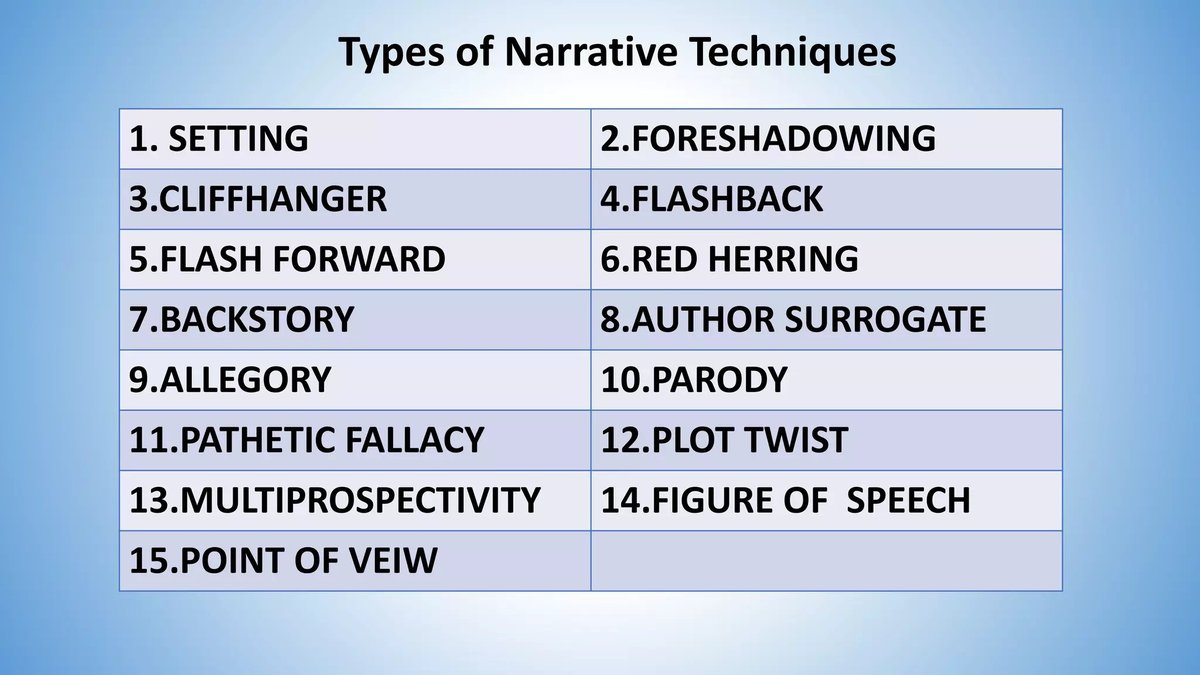
When a story grips you, pulls you through the pages, and refuses to let go, it's not by accident. That unputdownable quality, that feeling of breathlessness as you race towards a resolution, is the direct result of masterful Narrative Techniques for Urgency & Immediacy. These aren't just stylistic flourishes; they are the gears and levers that compel readers to lean in, to feel the clock ticking, and to fully immerse themselves in your world.
Whether you're crafting a nail-biting thriller, a poignant drama, a persuasive essay, or groundbreaking journalism, the ability to infuse your narrative with a palpable sense of now and the pressing need for action is your most potent tool. It transforms passive observation into an active experience, making your audience a participant rather than a mere spectator.
At a Glance: Crafting Unputdownable Stories
- Deadlines are gold: Specific time limits and clear, high-stakes consequences create tangible pressure.
- Show, don't summarize: Present frantic, real-time action to make readers feel events unfolding.
- Pacing is paramount: Tight, short sentences and fragments mirror speed and panic.
- Escalate, don't plateau: Continually raise the stakes to prevent reader disengagement.
- Layer the pressure: Combine multiple crises (deadlines, obstacles, adversaries) for complex urgency.
- Embrace what's unsaid: Strategic omissions can leverage imagination for powerful fear and urgency.
- Journalism's urgency: Connect distant problems to readers' lives with vivid imagery and individual stories.
- Beware the scolding tone: Focus on the affected, not just the reader's "need" to care.
The Irresistible Pull of Now: Why Urgency Demands Attention
In a world saturated with information and distractions, capturing—and holding—attention is an art. Urgency and immediacy cut through the noise. They tell your reader, implicitly or explicitly, "This matters, and it matters now." Without it, even the most compelling characters or groundbreaking facts can feel distant, abstract, or simply not compelling enough to prioritize over the myriad other demands on your audience's time.
Think about it: why do we binge-watch series, devour thrillers in a single sitting, or get deeply involved in a news story? Because skilled creators have expertly woven a thread of urgency, making us feel that something vital is unfolding, and we must know what happens next. This isn't just about speed; it's about making the stakes tangible and the present moment critical.
Journalist Paul A. Kramer, in his framework for "good trouble," highlights that the writer's job isn't just to inform, but to "sharpen the reader’s sense of why a problem is vital." When readers already "know" an issue exists, familiarity can breed complacency. Urgency combats this, revealing that problems aren't hypothetical futures but "current eruptions" that demand immediate engagement.
So, how do you inject this potent force into your own writing? Let's break down the most effective narrative techniques.
The Seven Pillars of Narrative Urgency: Making Every Moment Count
Mastering urgency is a sophisticated craft, transforming words into gripping experiences. It requires deliberate choices in every facet of your storytelling, from plot points to sentence structure.
1. Add Specific Deadlines with Real Consequences
Nothing screams "urgency" like a ticking clock, especially when failure carries a severe, tangible price. General deadlines ("soon," "before it's too late") are weak. Specificity is your ally here.
- The Fact: Precise timeframes (e.g., "forty-seven minutes," "midnight tonight") coupled with clear, high-stakes consequences (e.g., "blood pressure dropped beyond recovery," "the house would be repossessed") make urgency palpable. Readers understand exactly what's at stake and how little time remains.
- The Insight: Go beyond mere time. What are the emotional stakes? What visual indicators can you use to show conditions deteriorating? How does the character feel the pressure?
- The How-To:
- Be hyper-specific: Instead of "a few hours," try "two hours and fifteen minutes."
- Define the consequence: Clearly state what happens if the deadline is missed. Make it personal and devastating.
- Show internal and external reactions: Does your character sweat? Do they become reckless? Does the environment reflect the urgency (e.g., a darkening sky, a dying light)?
- Example: "Priya had forty-seven minutes to find the injection before her father’s blood pressure dropped beyond recovery. His skin was already cold, lips faintly blue." This immediately sets a high-stakes scenario with an undeniable time limit.
2. Use Time Markers Throughout Your Scene
Once you've established a deadline, don't let the reader forget it. Subtly weaving time markers throughout a scene maintains tension without resorting to heavy-handed exposition. It’s like the drip, drip, drip of water torture, gradually increasing the pressure.
- The Fact: Incorporate specific timestamps (e.g., "11:47 PM," "an hour later," "minutes crawled by") or sensory details that subtly remind readers of the passage of time and impending doom.
- The Insight: These markers act as narrative checkpoints, reinforcing the idea that the clock is relentlessly advancing. They can be explicit (a clock chiming) or implicit (the sun setting, a meal growing cold).
- The How-To:
- Integrate naturally: Don't stop the action to announce the time. Weave it into dialogue, narration, or character observations.
- Vary your markers: Use clocks, the position of the sun, the emptying of a coffee cup, the arrival of another character, or even a character's growing fatigue.
- Show the impact of time: Is the character making progress? Falling further behind?
- Example: "11:47 PM. The court order expired at midnight. The stacks of files on the lawyer’s desk seemed to multiply. She shoved another pile aside, sweat beading on her forehead. Almost there, almost there. 11:58 PM. There—the property deed he needed, tucked beneath a forgotten coffee mug."
3. Escalate Stakes Progressively
Urgency isn't a static state; it's a dynamic progression. If the stakes remain constant, readers will eventually grow accustomed to the pressure, and the urgency will dissipate. You must keep raising the bar.
- The Fact: Each obstacle overcome, each small victory, should reveal an even bigger, more challenging threat. The danger shouldn't just be there; it should be growing.
- The Insight: This technique prevents narrative plateau. Just as success seems within reach, introduce a new, more formidable challenge that ratchets up the tension further. It mimics the escalating reality of crises.
- The How-To:
- Don't settle for one problem: As soon as one threat is dealt with, introduce another, more complex one.
- Make setbacks meaningful: A character might solve one part of a problem only to realize their solution inadvertently created a larger one.
- Think in layers of threat: Start with a personal threat, then expand to a family, community, or even global threat.
- Example: A character successfully disarms one bomb-laden train with minutes to spare. Relief washes over them, only for a crackle on their radio to inform them of another bomb, this time on a different train heading into a populated city, with an impossible five-minute countdown. The initial success merely clears the path for a greater, more desperate struggle.
4. Show Real-Time Action Instead of Summary
Summarizing action kills urgency. When you tell readers what happened rather than showing them, you create distance. To generate immediacy, readers need to experience events as they unfold, moment by frantic moment, under pressure.
- The Fact: Real-time action involves describing specific, sensory details of frantic, repetitive movements and visible physical stress. It puts the reader in the scene, feeling every stumble and every frantic breath.
- The Insight: This isn't just about describing motion; it's about immersing the reader in the struggle. Show the sweat, the shaking hands, the muttered curses, the rising heart rate.
- The How-To:
- Focus on micro-actions: Don't say "She searched." Say "Anjali yanked open the third drawer, scattering pens across the floor. She dumped its contents onto the carpet, then spun to the bookshelf. Pulled textbooks from the shelf one by one, shaking each frantically."
- Use active verbs: Verbs like lunged, ripped, slammed, clawed convey immediate action.
- Include sensory details: What does the character hear, see, smell, feel in this intense moment?
- Example: "Anjali yanked open the third drawer, scattering pens across the floor. She dumped its contents onto the carpet, then spun to the bookshelf. Pulled textbooks from the shelf one by one, shaking each frantically. Her heart hammered against her ribs. Rohan’s board exam started in ninety minutes, and the hall ticket was nowhere."
5. Tighten Your Prose to Match the Pace
Fast-paced stories demand fast-paced sentences. Urgency thrives in lean, muscular prose, devoid of unnecessary words or meandering descriptions. When the stakes are high, every word counts, and every moment is precious.
- The Fact: Employ short sentences, fragments, and a staccato rhythm to mirror panic, speed, and rising tension. Strip away adverbs and adjectives that don't add essential information.
- The Insight: The rhythm of your prose should physically embody the urgency. Longer, more complex sentences slow the reader down, reducing the feeling of immediacy. Short, punchy sentences propel them forward.
- The How-To:
- Sentence fragments: Use them strategically for impact: "The blast. Realization. Horror. Instinct. Kavita ran."
- Short, declarative sentences: "The door jammed. He pulled. It wouldn't budge. Fire spread."
- Eliminate filler: Scrutinize every word. Does it earn its place? If not, cut it.
- Vary sentence length: While short sentences dominate, a sudden longer sentence can occasionally emphasize a momentary pause or a character's spiraling thoughts before returning to the frenetic pace.
- Example: "The blast. Realization. Horror. Instinct. Kavita ran. Glass shards rained. Screams echoed. Her son. Inside. She pushed through the smoke, lungs burning, vision blurring. No time. Had to reach him."
6. Layer Multiple Pressures
True urgency often isn't born from a single crisis, but from a confluence of converging problems, each exacerbating the others. This creates a rich, complex web of pressure that feels more realistic and overwhelming.
- The Fact: Combine deadlines with environmental obstacles (traffic, weather), communication issues, and active adversaries. Each element adds another layer of stress.
- The Insight: Life rarely presents one neat problem at a time. By layering pressures, you create a more authentic sense of chaos and desperation, making the character's struggle more compelling.
- The How-To:
- Brainstorm compounding factors: If a character has a deadline, what else could go wrong? A flat tire? A storm? A rival spreading rumors?
- Make problems interconnected: How does solving one problem make another worse, or reveal another entirely?
- Show the character's mental state: How does being overwhelmed manifest? Panic? Rage? Despair?
- Example: "Sunil had two hours to file the crucial papers for his ancestral land, or his family would lose everything. He was stuck in peak hour traffic, his old car sputtering fumes. His phone battery, his only link to the lawyer, was at 3%. And somewhere behind him, he knew his cousin, the adversary who wanted that land, was likely pulling strings to delay him further. The rain began to fall, turning the road slick and visibility poor." This character isn't just dealing with a deadline; they're battling systemic failure, technology, nature, and human malice all at once.
7. Create Urgency Through What You Don’t Say
Sometimes, the most terrifying threats are the ones left to the reader's imagination. Strategic omission can be a powerful generator of urgency, allowing the reader's mind to fill in the horrifying gaps.
- The Fact: Ambiguity can be far more frightening and urgent than explicit description. Instead of detailing violence, reference its specific, tangible impacts or the fear of what could happen.
- The Insight: This technique relies on the reader's innate ability to extrapolate and imagine the worst. By giving just enough information to hint at a dreadful possibility, you create a more personal and potent fear.
- The How-To:
- Hint at consequences without showing: "She had to reach her brother before they did. She’d seen what they left behind in Ramesh’s tea stall last month. The stall had to be closed, perhaps forever." The reader imagines the violence, the destruction, the irreversible damage.
- Use chilling metaphors or similes: Describe the aftermath with unsettling imagery rather than graphic detail.
- Focus on the character's reaction: Their fear, their desperation, their visceral need to act now can convey the unspoken threat.
- Example: "Deepa had to reach her brother before they did. She’d seen what they left behind in Ramesh’s tea stall last month. The stall had to be closed, perhaps forever. She had two hours. Maybe less. The memory of the silence from Ramesh's street, the way the crows had gathered, clawed at her." The implied threat is far more potent than any detailed description of violence could be.
Journalistic Trouble: Highlighting Urgency & Proximity in Non-Fiction
While these techniques are often discussed in the realm of fiction, they are equally, if not more, crucial for compelling non-fiction, especially journalism. Paul A. Kramer argues that "good trouble" journalism reveals the immediacy of problems, convincing readers that their continuance is not inevitable. The goal is to "sharpen the reader’s sense of why a problem is vital."
Here's how to apply urgency techniques to make real-world issues resonate:
Show Current Eruption
Don't let readers believe a problem is hypothetical or future-projected. Demonstrate that it's already happening.
- Instead of: Discussing climate change in terms of unlivable futures fifty years from now.
- Do this: Focus on immediate, current climate-induced catastrophes like Hurricane Sandy. Describe the "grim here-and-now" of flooded streets, destroyed homes, and desperate relief efforts. Show how cities are already "climate-proofing" through raising electrical cables or interlinking communication grids. This makes the threat tangible and present. Explore the power of present film uses a similar idea to capture immediate impact.
Elevate Stakes
Reveal that the consequences of a problem are far higher than previously imagined.
- Instead of: Stating that a particular policy might have "negative economic impacts."
- Do this: Detail how that policy directly leads to a family losing their home, a community's water supply becoming contaminated, or a vital social program being defunded, leaving vulnerable populations without support. Quantify the human cost.
Bring it Home
Connect distant problems directly to your readers' lives and world. Proximity breeds urgency.
- Instead of: Reporting on global deforestation.
- Do this: Explain how that deforestation impacts local weather patterns, contributes to the specific allergens affecting your readers, or influences the price of goods they buy at the supermarket. Show how global issues have local echoes.
Vivid Imagery
Craft sensory descriptions that communicate the problem’s immediate impacts and implications.
- Instead of: Saying "air pollution is a problem."
- Do this: Describe the persistent coughs of children in polluted neighborhoods, the hazy skyline obscuring familiar landmarks, the acrid smell of burning refuse that permeates homes. Use details that engage the senses.
Focus on Affected Individuals
Highlight the stories of people for whom the problem is already a tangible, urgent reality.
- Instead of: Presenting statistics on homelessness.
- Do this: Introduce a single mother struggling to find shelter for her children tonight, an elderly person facing eviction, or a young person whose only option is a tent city. Their personal struggles make the systemic problem immediate and human.
The Perils of Urgency: A Word of Caution
While powerful, over-emphasizing urgency, especially in journalism, carries risks. Writers might inadvertently:
- Over-emphasize the problem's significance for the reader: This can come across as scolding or self-righteous, suggesting the reader should care more, rather than demonstrating why they should.
- Shift focus from the truly affected: The primary goal should be to shed light on those most intensely impacted by the problem, not to guilt-trip a comfortable audience.
Done well, however, integrating these narrative techniques into your non-fiction can be profoundly effective. It can eliminate the psychological buffers that insulate readers from pressing realities, prompting genuine empathy and a desire for change.
The Nuance of Sustaining Urgency: Not Every Moment is a Sprint
While the preceding techniques focus on creating urgency, it's equally important to understand how to sustain it without burning out your reader. Constant, relentless urgency can be exhausting and lead to desensitization.
- Pacing Variation: Not every scene needs to be a breathless sprint. Strategic moments of respite or slower pacing can actually amplify subsequent moments of urgency. Think of it as a musical composition: quiet passages make the crescendos more impactful.
- False Rhythms and Hope: Introduce moments where characters believe they've found a solution, only for it to be a dead end or to reveal a new, greater threat. This ebb and flow of hope and despair keeps readers invested.
- Internal vs. External Urgency: Sometimes the ticking clock is external (a bomb, a deadline), but often it's internal (a character's dwindling hope, a secret about to be revealed, a moral dilemma). Leverage both. A character's internal struggle to make an impossible choice can create as much urgency as an external threat.
- Grounding in Reality: As suggested in the research, grounding urgency in authentic contexts like traffic, family pressures, bureaucratic deadlines, and weather makes scenes transformative for the reader. These everyday frustrations become powerful tools when magnified by extreme stakes.
Common Misconceptions About Urgency
- "Urgency means constant action." Not necessarily. Psychological tension, a ticking internal clock, or the dread of an unseen threat can be incredibly urgent without constant physical movement.
- "You need a life-or-death situation." While effective, urgency can stem from anything with significant, irreversible consequences – a ruined reputation, a missed opportunity, a broken relationship, a lost piece of art. The key is consequence.
- "It's just for thrillers." Every genre benefits. A romance novel can have the urgency of a character needing to confess their feelings before their beloved leaves town, or a historical drama can highlight the urgency of a political decision with irreversible outcomes.
The Craft of Compulsion: A Final Word on Making Your Stories Unputdownable
Every word choice, every scene structure, and every pacing decision you make either contributes to or detracts from the urgency in your narrative. Building a truly unputdownable story isn't about throwing in a few frantic sentences; it's about a holistic approach that embeds the feeling of now, of high stakes, and of impending consequence into the very fabric of your writing.
By deliberately applying these narrative techniques, you're not just telling a story; you're creating an experience. You're inviting your readers into a world where time is short, the stakes are sky-high, and every decision matters. This mastery of urgency and immediacy is what elevates good writing to great writing, compelling your audience to stay with you until the very last word. Now, go forth and make your stories irresistible.